ST KEW CHURCH - ST JAMES THE GREAT
Our Church
The present church was built in the 15th century, but is believed to be the site of the former Chapel and cemetery of one of the earliest Celtic monasteries in Cornwall, reputedly founded by St Docco and recorded as visited in the 6th century by St Samson whilst crossing from Wales to Brittany. The ancient chapel had been dedicated to St.Kew in the year 962, a legendary saint who was reputedly the sister of St Docco. and to Docco himself, although his name was dropped after the 10th century.
There remains few indications of the monastery although A small stone, The ogham stone, which sits in the church, inscribed the name IUSTI in a cartouche of both Latin and Ogam characters, is another indicator of the antiquity of this site, a probable memorial to a monk of the fifth century.
During the medieval period, the parish contained two additional chapels, one dedicated to Wenna, one of daughters of Brychan at Pengenna, and another to the Anglo-Saxon saint Aldhelm at Chapel Amble.
Although there is no evidence of the church being rededicated to St James the Great, he has been regarded as the patron saint since the late 15th century. The present church building, also dedicated to St Kew, was financed by tithes and taxes of local landowners. Built after the Black Death it acted as a house of prayer to ease the path of the souls of the dead.
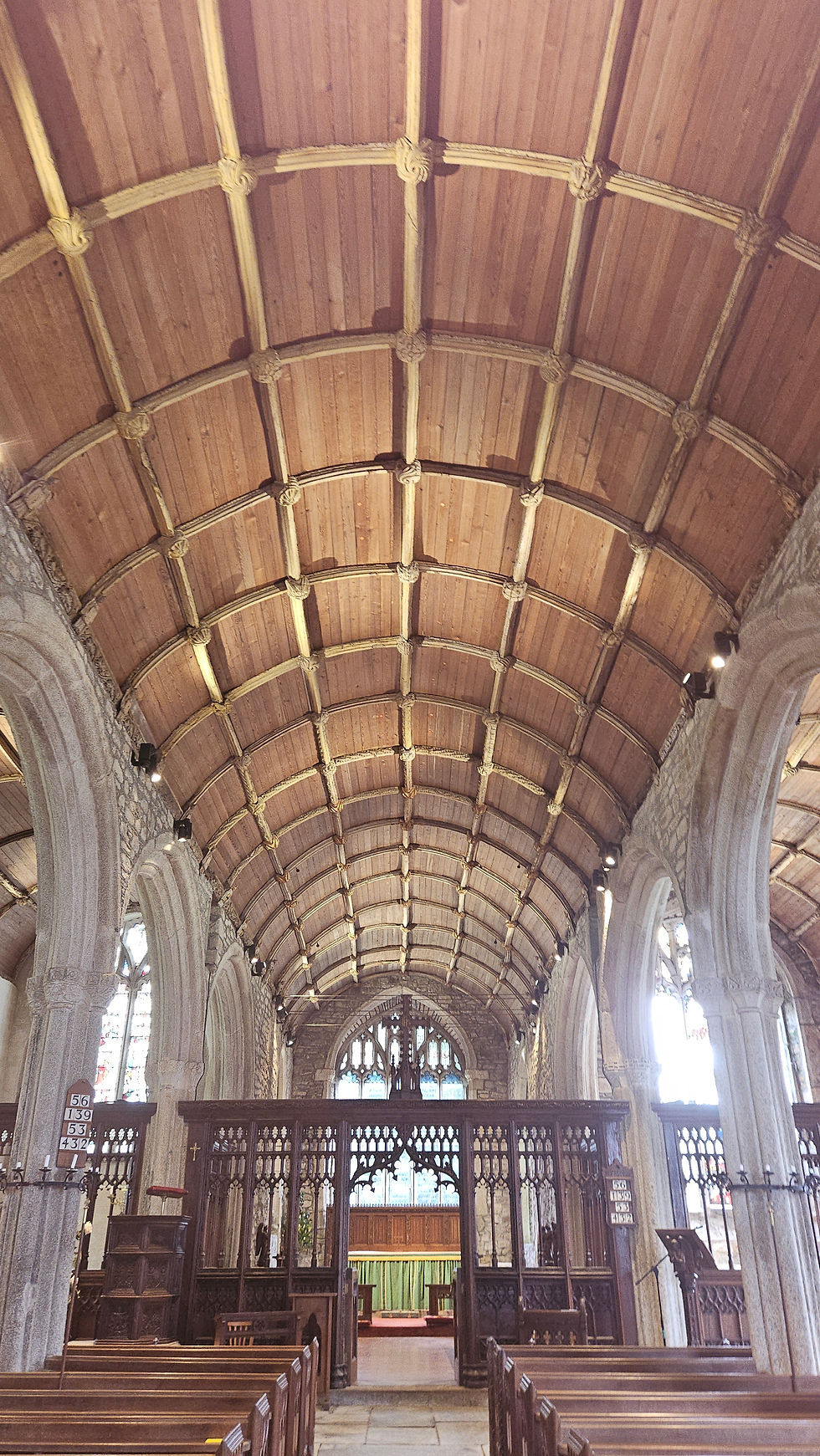
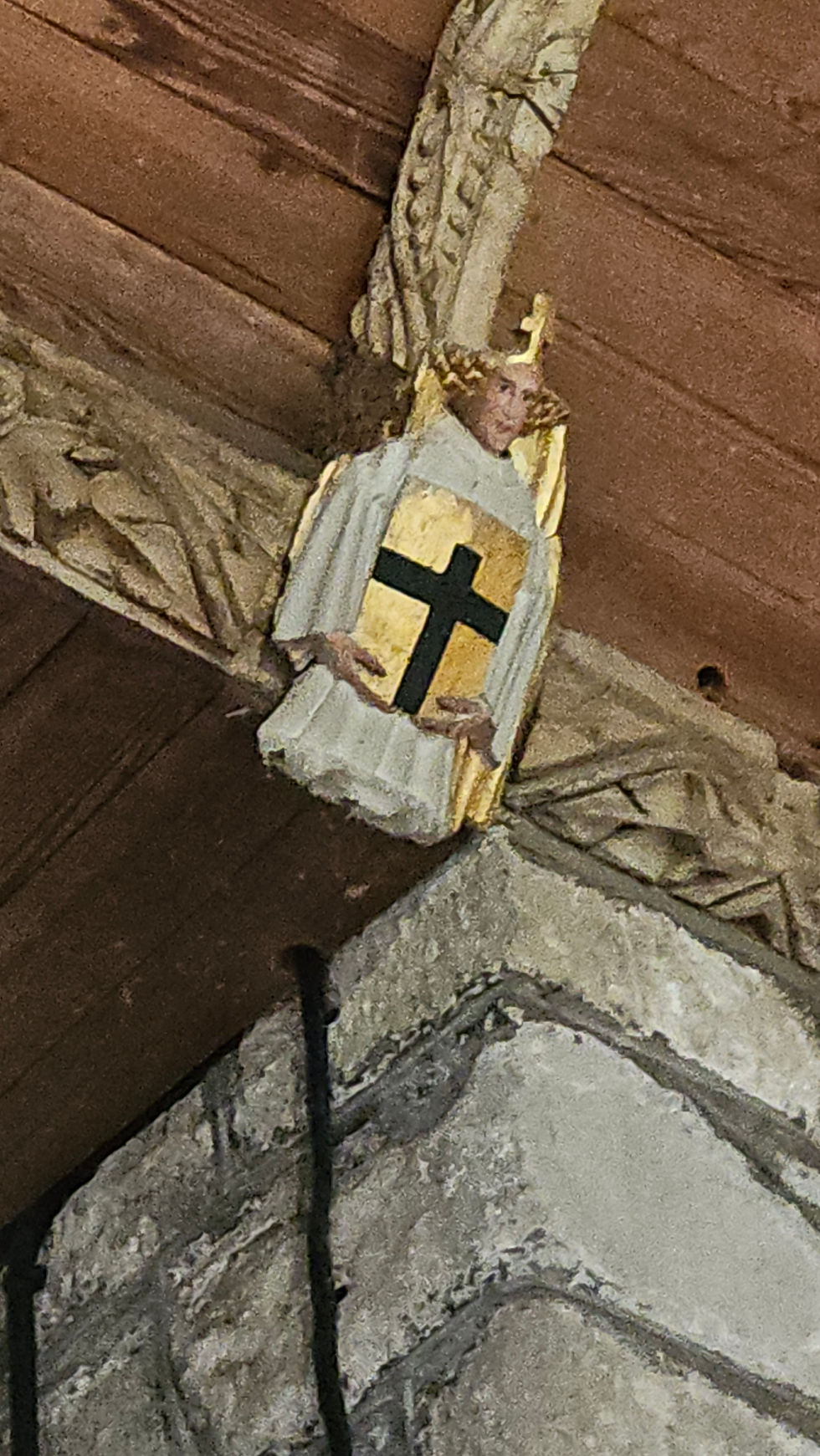
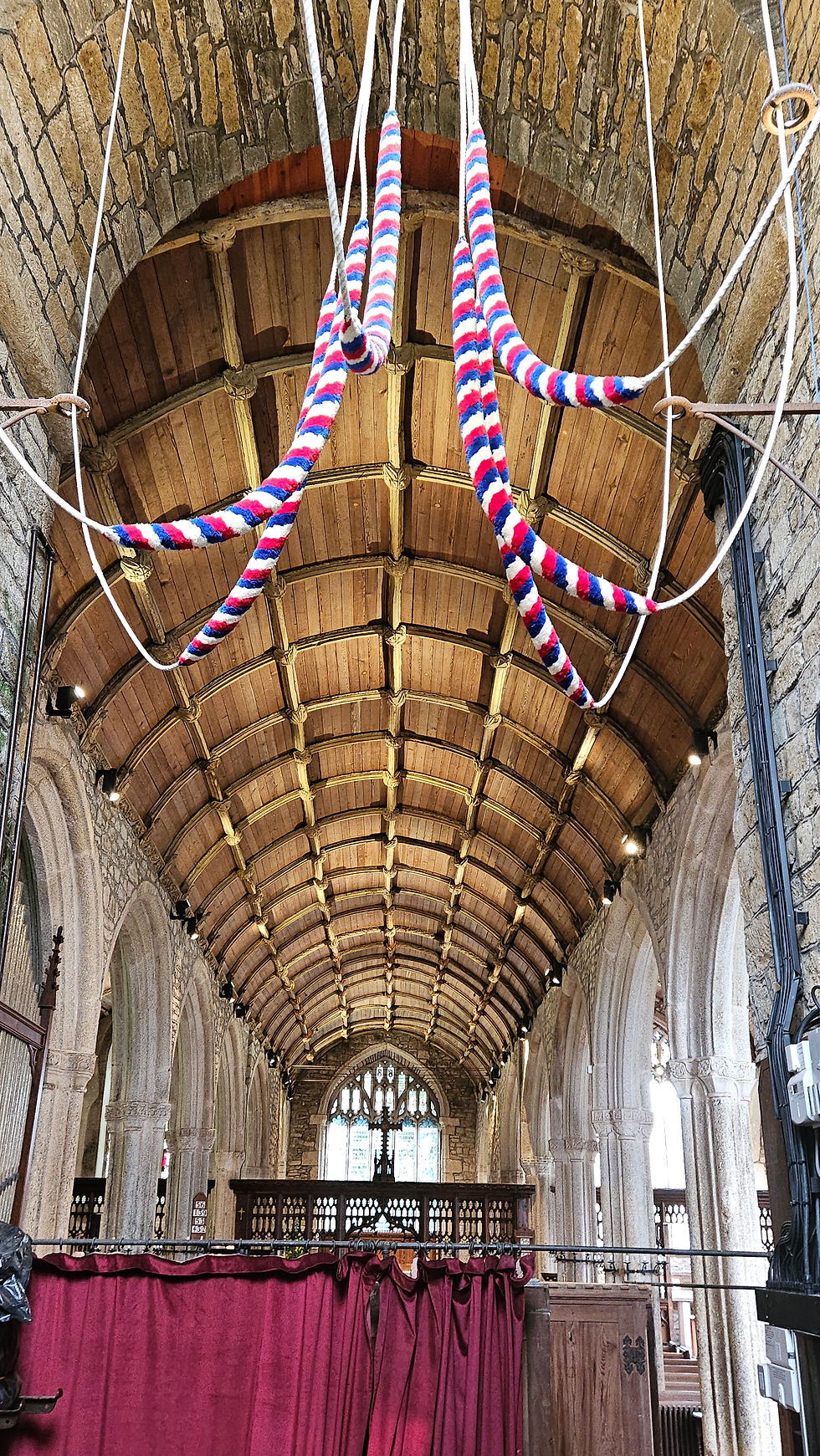
Inside the church the high nave has a wagon roof, with original beams and carved angels at the foot of each. There is a Jacobean pulpit, a Victorian rood screen and pews, some of which possess the original medieval carved ends. The surviving newel staircase once led to a rood loft, from which the veil would be suspended at Eastertide over statues of Christ crucified (the rood), his mother Mary and disciple John.




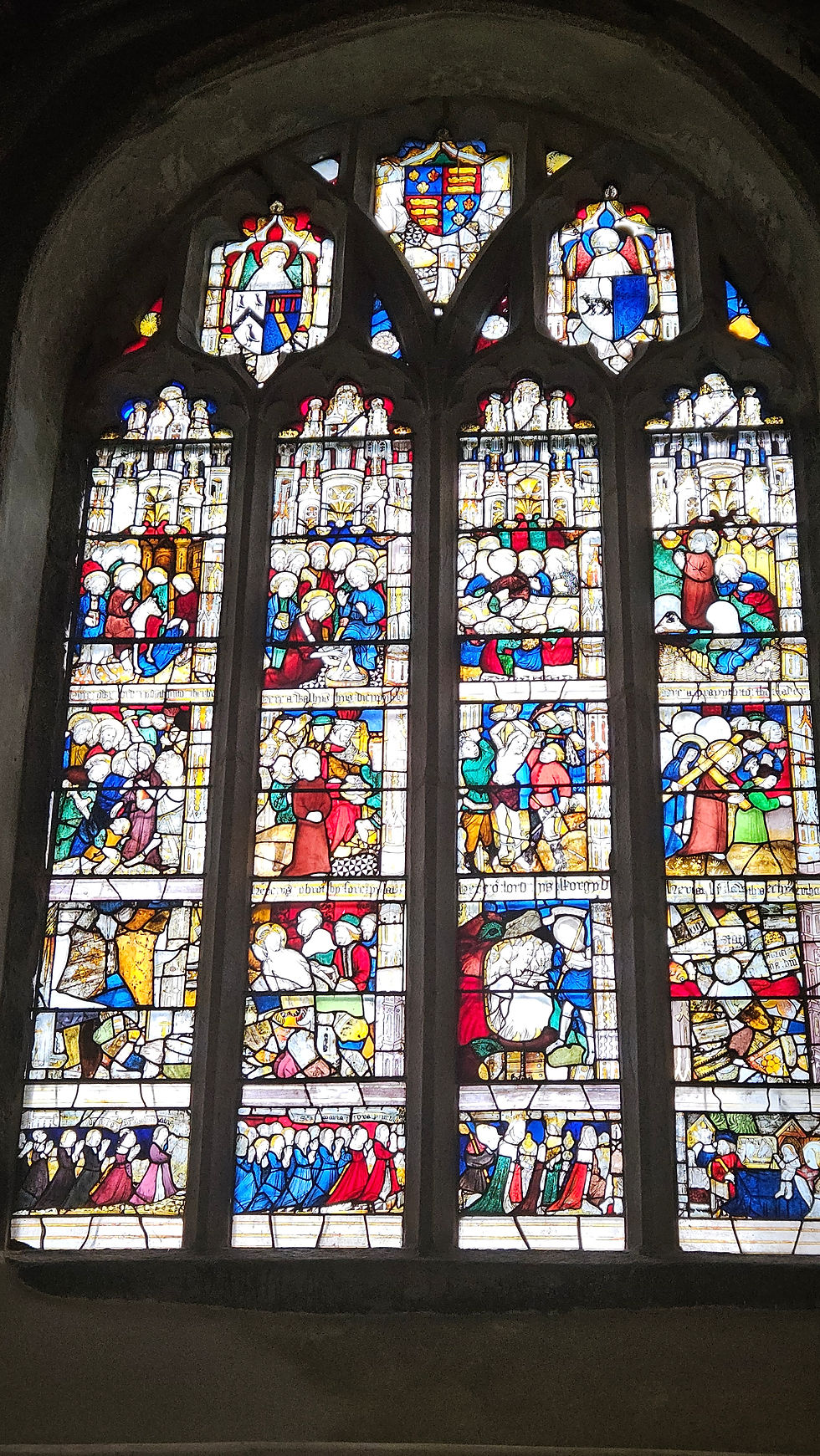
One of the glories of St Kew church is the medieval glass in its windows, second only to St Neot. The glass for one window was certainly bought in 1469 second-hand at Bodmin. Possibly this included the tree of Jesse still to be seen in the South East window. The east window of the north chapel dates to c.1490 and was given by the Pentire and Bere families of St Kew. It tells the story of Christ’s Passion and is of high quality and may have been made in Exeter. Arranged in scenes, like a comic book, the Passion is explained in English, rather than Latin, below.
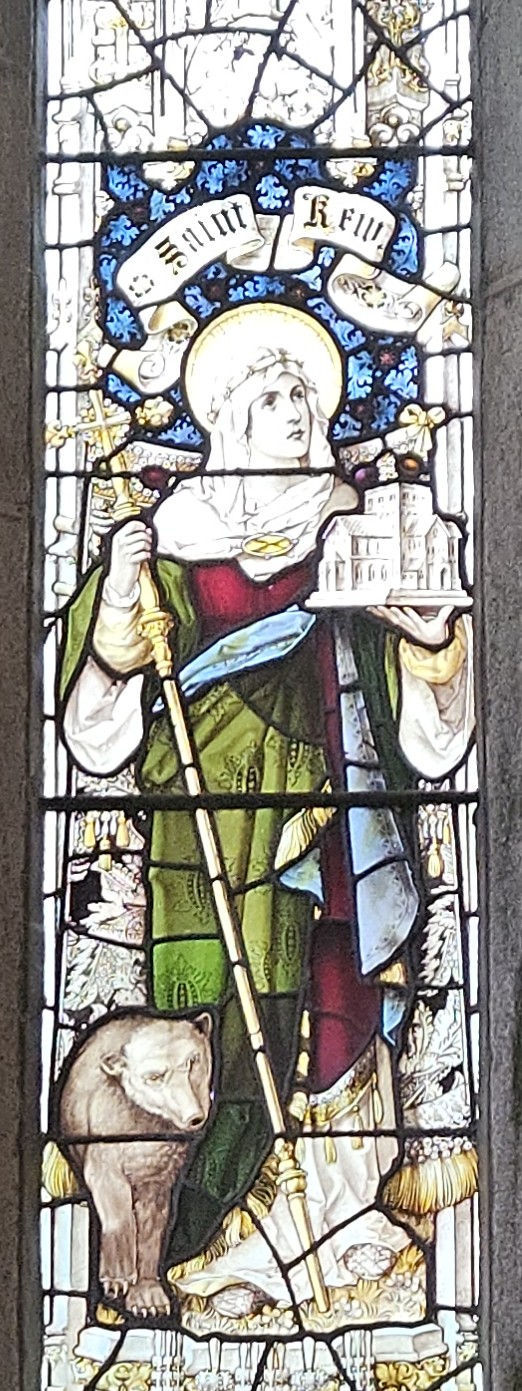
One of the Victorian windows depicts four saints, including St. Kew with the boar and St.James with his scallop shell. It was erected in the time of the Revd. Nicholas Thomas, who was vicar here for over sixty years (1851- 1916) and travelled on horseback through the parish with his bulldog.

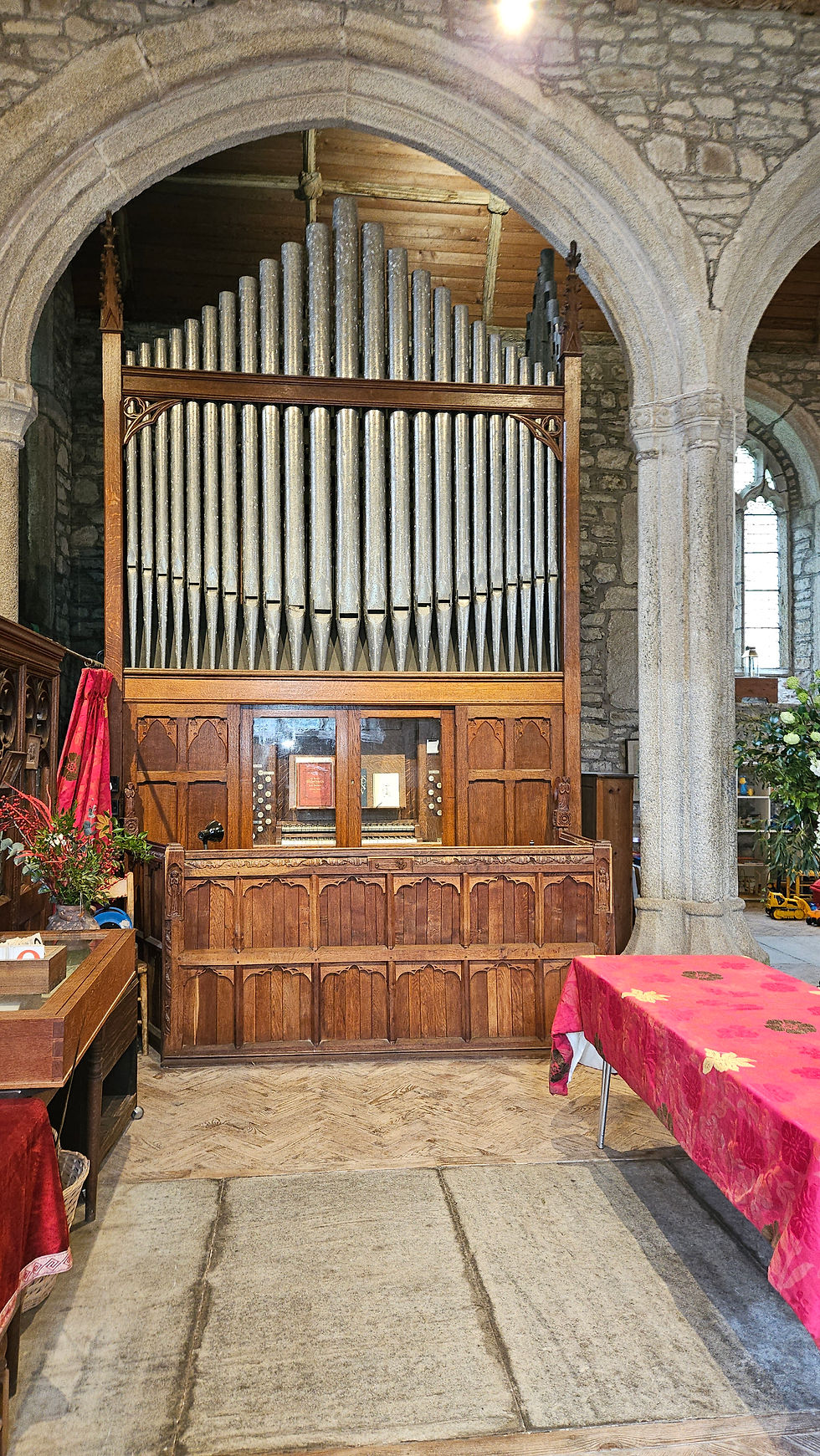
Revd. Nicholas Thomas also installed the organ in 1903, and was so concerned about the lack of leisure facilities for the young men that he had a meeting place built.
Around the walls and floor are memorials and an old plough rests in the church of this mainly agricultural parish. In the 18th century, there was some silver and lead mining in the parish.



On examination of the tower we see the shaft of yet another cross, possibly from the original churchyard cross.
A treasure of the church less well-known than the windows is the ‘Ringers Rhyme’ board dated 1783. There were four bells in 1552; recast in 1760 to make six, and recast again in 1813. Most of the present ringers belong to old St. Kew families, the present Captain of the Tower being Ken Godden a local farmer.
A Lantern cross head of Catacleuse stone now in the church was found at Skisdon, a nearby manor. Another similar type of cross from St Kew is in St. Neot’s churchyard, while a third, now in the churchyard, was used as a bridge at Polrode Mill (about three miles to the east) and erected here in 1908.